
Why We Picked This Event
I have been dancing tango at the Beat on Mondays regularly. On one of those nights, Ayano and Felipe announced that they were going to host the All Night Milonga instead of the 4th Thursday of December on New Year’s Eve. I could not think of a more interesting way to celebrate the New Year than dancing.
All Night Milonga has been organized at the Beat since January 2000. Rumors say that before COVID the dance continued until 4 and even 5 am at times. Post-Covid, it now lasts until 3 am. A nap is recommended during the day, to keep your energy going and body moving this late.
What is “Milonga”?
Milonga has three connected meanings: a musical genre, a dance, and a social dance gathering.
The word and practice developed around the Rio de la Plata region, located on the east coast of South America and forming part of the border between Argentina to the south and Uruguay to the north, especially Buenos Aires and Montevideo — where Argentine and Uruguayan urban working-class cultures mixed with African and European traditions.
As music, it is generally faster and more rhythmically direct than later tango.
As an event, “milonga” means a place or gathering where people dance tango, vals, and milonga. So hey friends, when I say “I’m going to a milonga,” it means a tango social night, not only the milonga dance itself.
Event Details
Location: 2560 9th Street, Suite 119, Berkeley, CA.
Time: 8:00 pm - 9:00 pm All Levels Class; 9:00 pm - 3:00 am Milonga with Guest DJ. Some nights, there is no class. You can check the event details on the My Events Bridge event page.
When: 4th Saturdays.
Price: Milonga + Class $35-$45 sliding scale; Milonga only $25-$35 sliding scale. Please check in at the front desk when you arrive.
Payment: Venmo or cash. Registration is required only for first-time attendees: Tangonnection registration page.
Parking: Street parking is available.
Food & Drinks: Refreshments are provided throughout the night. Water is available, but bringing your own bottle is recommended. You are also welcome to bring snacks to share.
About the Location
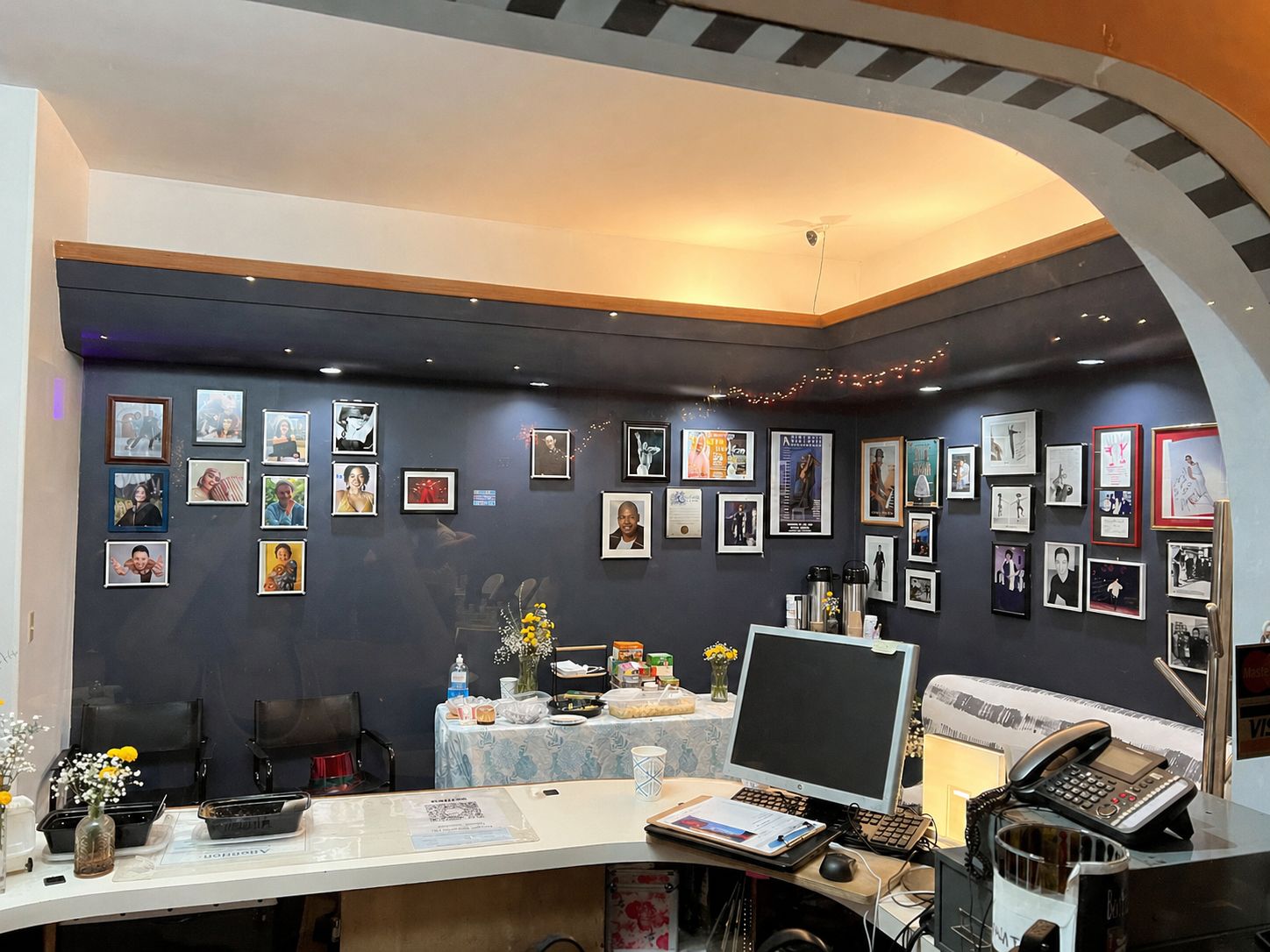
The Beat is the Berkeley Performing Arts Center, a non-profit organization that provides dance and movement classes accessible to all ages and offers a variety of classes. Tap dance, samba, west coast swing, salsa, east coast swing, jazz blues, kizomba, and tango of course. There is also a small lounge area where dancers step out to rest, chat, or take a break between tandas. Dancers usually settle in by leaving their belongings under their chairs or at their table, moving between the floor and lounge throughout the night.
A Quick Guide to Feeling Ready for the Night
Shoes
The night is going to be long. But this is also milonga. Ladies might prefer heels between 1.5 inches and 3.5+ inches depending on their comfort level and the role preference. Some ladies are able to dance in heels even as a leader, but sometimes it is easier to switch to flat shoes if they decide to lead for that part of the night. Men prefer flat shoes while both lead and follow. The higher the heel, the more pressure of the body weight will be on the forefoot — beautiful, but your feet may have opinions by 2 am.
Dress Code
Milongas are a great opportunity to dress up. You can be festive depending on how you feel for the night. Many dancers like wrap dresses, stretch jersey dresses, tango skirts, or dresses with a slit that allows leg movement, and even comfortable pants. A button-down shirt is the classic option for men. Short sleeves, long sleeves, or a fitted dress shirt all work. Many men bring an extra shirt because tango can get warm. Dress pants, chinos, or dark slacks are common. They should allow comfortable walking, pivoting, and bending. And some men like to wear jackets even when they are dancing.
Partner
I went to the milonga without a partner. You do not need to know anyone before the dance — and it’s completely okay to take your time and ease into the night.
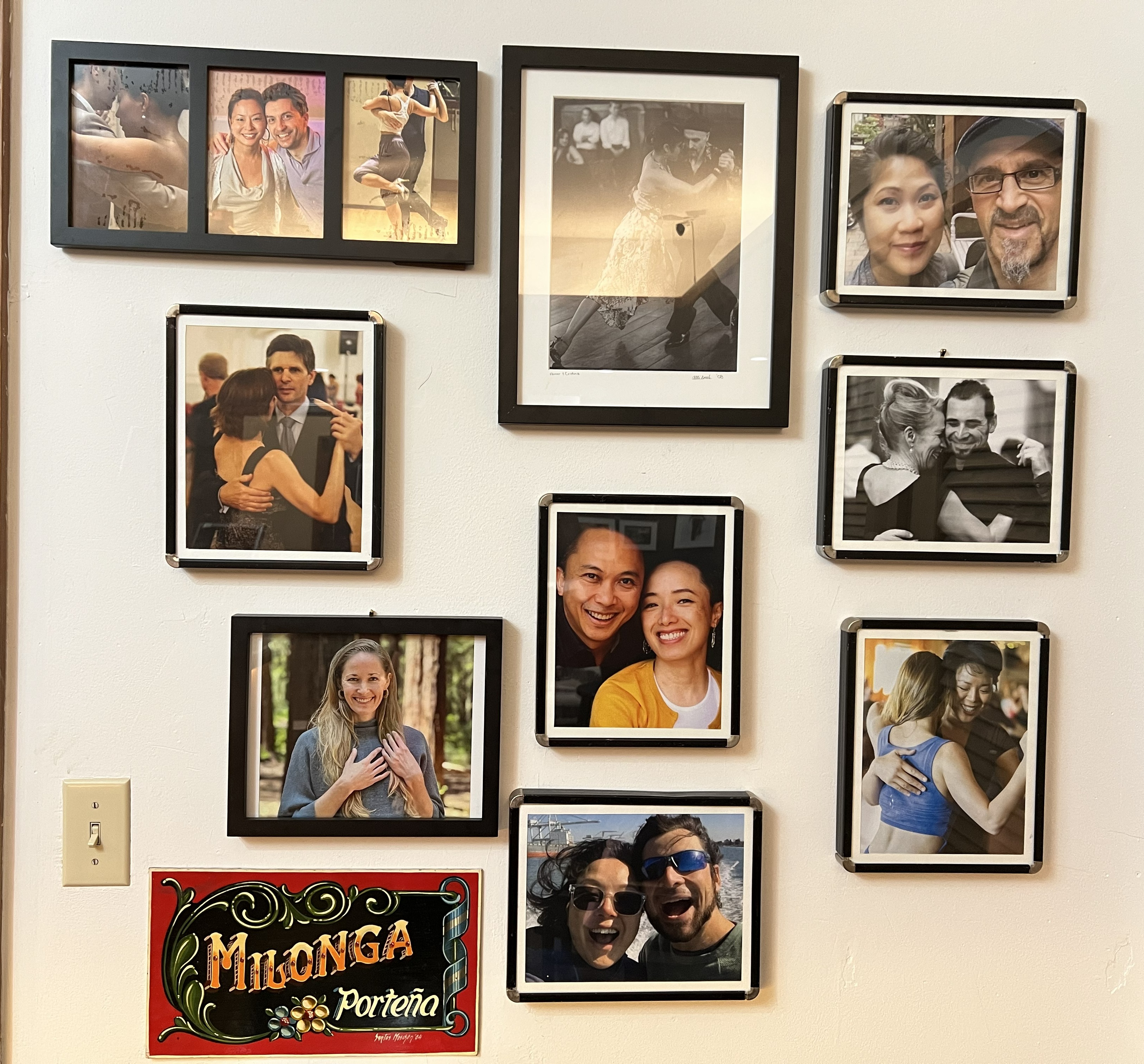
There are also some couples who are lucky enough to have their life partners or spouses as tango dancers.
Asking for a Dance
If you are chatting with the person sitting next to you, you can informally ask “shall we dance?” but the traditional way of asking for a dance is the cabeceoThis is where the leader makes eye contact and gives a slight head nod or tilt, and the follower catches the eye contact and responds with a nod.. Once you say yes to a dance, be ready to dance 3-4 songs during one tandaTango DJs usually play music in either 3 or 4 song sets called tandas. Usually, all of the songs in a tanda will be by the same orchestra with the same singer and/or from the same time period. All of the songs should have a consistent feel and rhythm. with the same partner. If the eye contact doesn’t happen, don’t worry — sometimes it’s not rejection, just timing, angles, or someone very focused on the music (or the floor). At the end of the tanda, some partners walk each other back to their seats, while others simply thank each other on the dance floor — both are completely normal.
The dance floor typically moves in a counterclockwise direction. Dancers follow this shared flow, staying in their lane and moving with the group rather than against it. If you're unsure, watching a few tandas before stepping in can help you understand the flow of the room.
Skill Levels
Sometimes it can be a bit trickier for beginner dancers to follow the line of dance while they focus on safety, navigation, music, and movement when the floor gets crowded — not impossible, but it may feel like a lot at first.
That said, it is still absolutely okay to come, observe, dance selectively, and experience the atmosphere. Many dancers learn just by being in the room.
Snacks & Water
Refreshments are provided throughout the night. Water is available, but it is recommended that you bring your own bottle. You are also welcome to bring snacks to share. You will need some of it in order to last until 3 am — tango is emotional, but also surprisingly physical.
Vibe
Energetic, exciting, sociable, and buzzing with curiosity and conversation.
Crowd Size
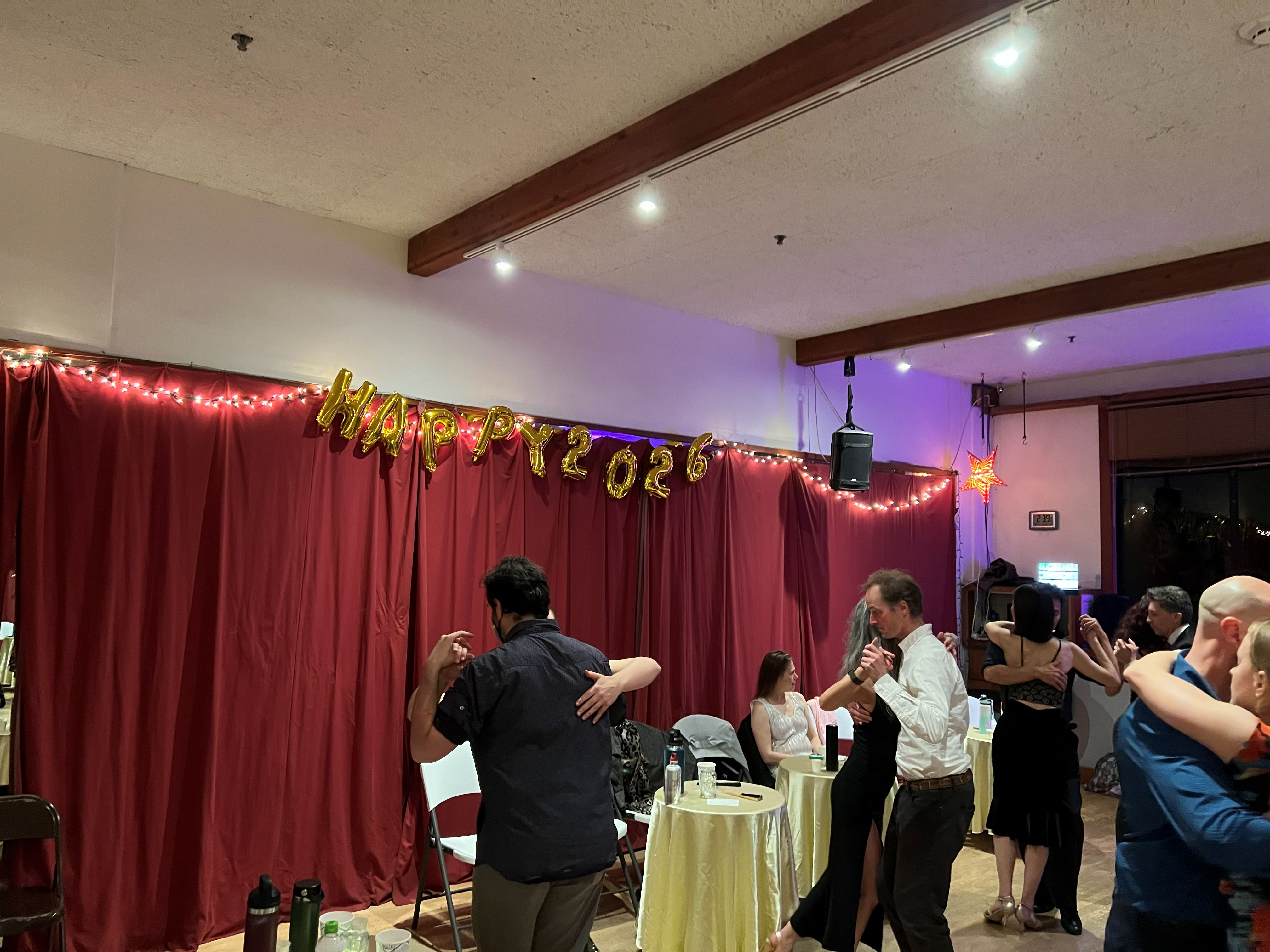
New Year’s Eve was limited to 100 dancers and it was sold out.
Stories from the Dance Floor
I was one of the early dancers of the night. The tables and chairs were set, but there was still some additional party setup going on. When I put on my jacket and changed my shoes, I got the chance to meet the other earlycomers. The DJ already had the music playing, but no one was dancing. And then I saw the cabeceo, nodded, and said yes to dance.
When in Doubt, Breathe Out
I had never seen him nor danced with him before, so we approached each other. There is always a hesitation of the unknown — a very human moment on a very full dance floor — when you are dancing with a new person. Will the connection be easy? Will I hear the message coming through the torso? As those questions started to wander in my mind, he just paused and breathed. I responded with my own breath. Then everything changed. All my thoughts were gone, I relaxed, my upper body softened, and I stepped into the moment. The mental reset. And the intention was set. That one inhale made the lead and follow clearer because we were less reactive. It improved the quality of the shared movement. I felt very appreciative to this new person, just like that.
Walking the Miles
The dance floor was still empty (100 people did not hit the floor yet), and he was taking long steps — a luxurious moment for me, giving me the opportunity to extend my legs. While the tango walk is fundamentally grounded and often compact, long steps are an intentional stylistic choice used for specific musical moments or to navigate a large, open space before the floor fills up and that spacious luxury turns into navigation mode. So yay!
Tango cardio moment — long but fast steps. Getting warmer and warmer for the rest of the night. Legs were getting more and more ready.
Countdown to New Year’s Eve
We were dancing just before midnight, then we paused, everyone cheered together, counting down to midnight: “10, 9, 8, 7, 6, 5, 4, 3, 2, 1... Happy New Year!” hugging the people that we know, and then continued to dance until early morning.
Summary
Some people come at 9:00 pm and stay 2-3 hours and leave, some people come much later and dance until 3:00 am. And some like me, come at the start, dance, rest, observe, meet new dancers, chat with both familiar and unfamiliar faces.
It’s not about dancing nonstop for six hours (your feet will gently protest if you try). It’s about pacing yourself, taking breaks, choosing your tandas, maybe sitting and listening as much as dancing. Bring a change of shirt, comfortable shoes, and the mindset that the night has waves — you don’t have to ride all of them.
Support the Rhythm
All Night Milonga isn’t just a dance event, it’s a slow, unfolding night with its own rhythm, almost like a small journey. As the hours pass, the energy shifts — from the early arrivals finding their footing, to the deeper, quieter moments when only those who stay begin to share the floor in a different way.
Spaces like this invite a different kind of presence. One that’s easy to miss if you leave too early. Not rushed, not performative, but patient. You begin to notice how the dance changes after midnight, how the music settles into you, and how the room itself softens as the night moves forward.
My Events Bridge exists to make it easier to discover dance events like this across the Bay Area — from traditional milongas to other social dance events — with a sense of what the night might become, not just how it begins.
If you'd like to support the work behind this platform, you can do so through Buy Me a Coffee. Your support helps sustain the time spent attending events, writing reflections, and maintaining a space where dancers can explore these experiences with more clarity.
Your support — through Buy Me a Coffee, sharing this platform, or returning when planning your next dance — helps keep this rhythm moving forward.
Thank you for being here.
Back to Blog