Why we picked this event
I have been hearing about the Tea&Tango - Feeling Flow for a while, and when I saw on My Events Bridge that they are having a Thanksgiving Milonga with three live bands on the same day-something rarely heard of- I knew it was something that I did not want to miss. Since it was a day long milonga, I would be exploring a new location in Palo Alto, meeting a new tango community and listening to new bands, enjoying the potluck, dancing to live music.
Feeling Flow - Tea&Tango - Karn Verma
The event is organized by Karn Verma, who is the owner of the Feeling Flow dance school in Palo Alto. Tea&Tango is not just a one-off event. It includes a 6-week dance class series for beginners and intermediate levels, and it also organizes Practicalonga every Saturday, with live music on select weeks.
When asked why there were three bands on the same day, he said it was the 3rd anniversary of Tea&Tango, hence the three bands.
He is an engineer who works in tech but balances his life with Feeling Flow, Tea&Tango, and various dance projects. This is absolutely not a side hustle or hobby for him; he is in the process of creating an art school.
Event Details
Location: 1680 Bryant St, Palo Alto, CA – Feeling Flow dance school
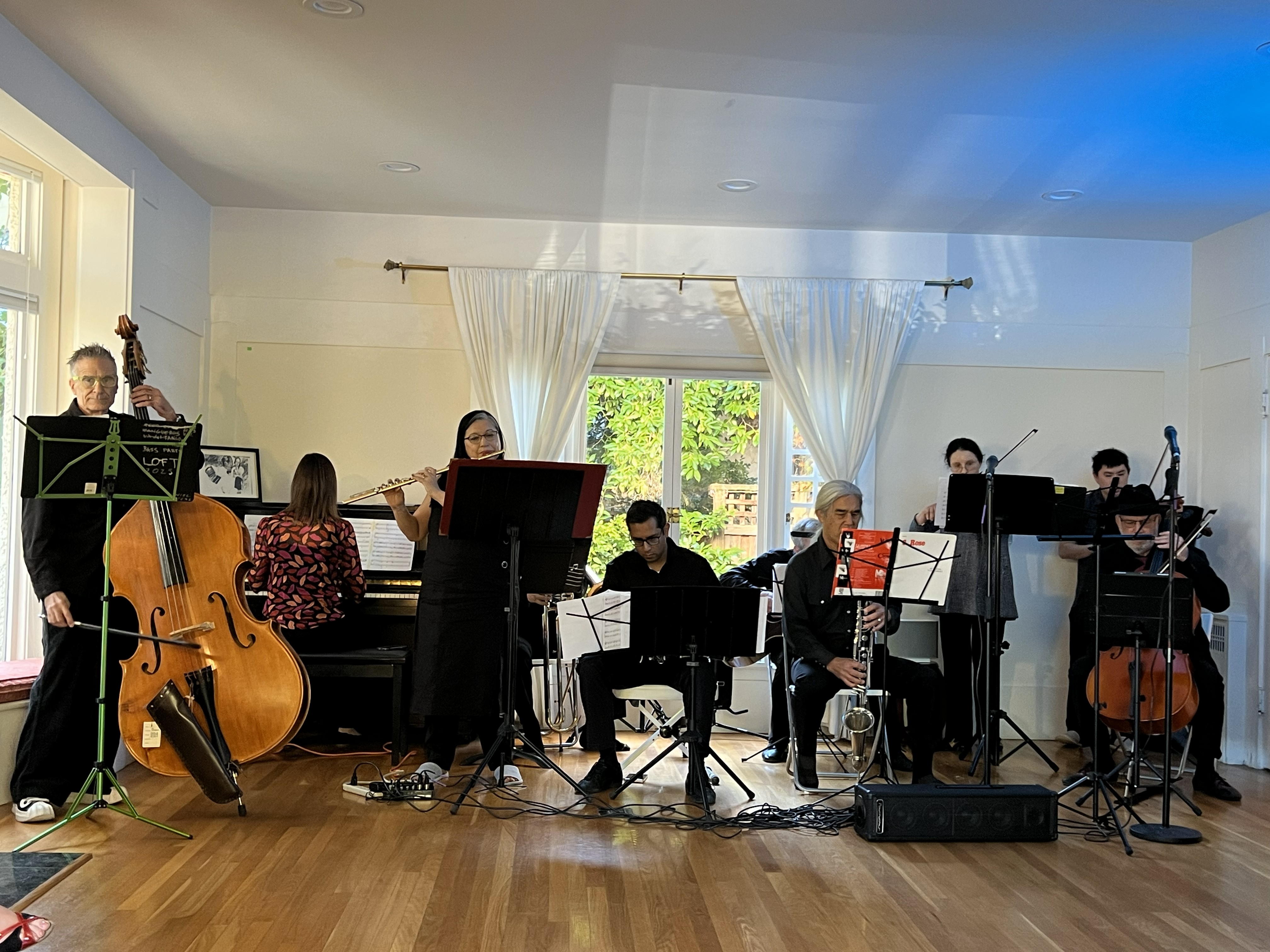
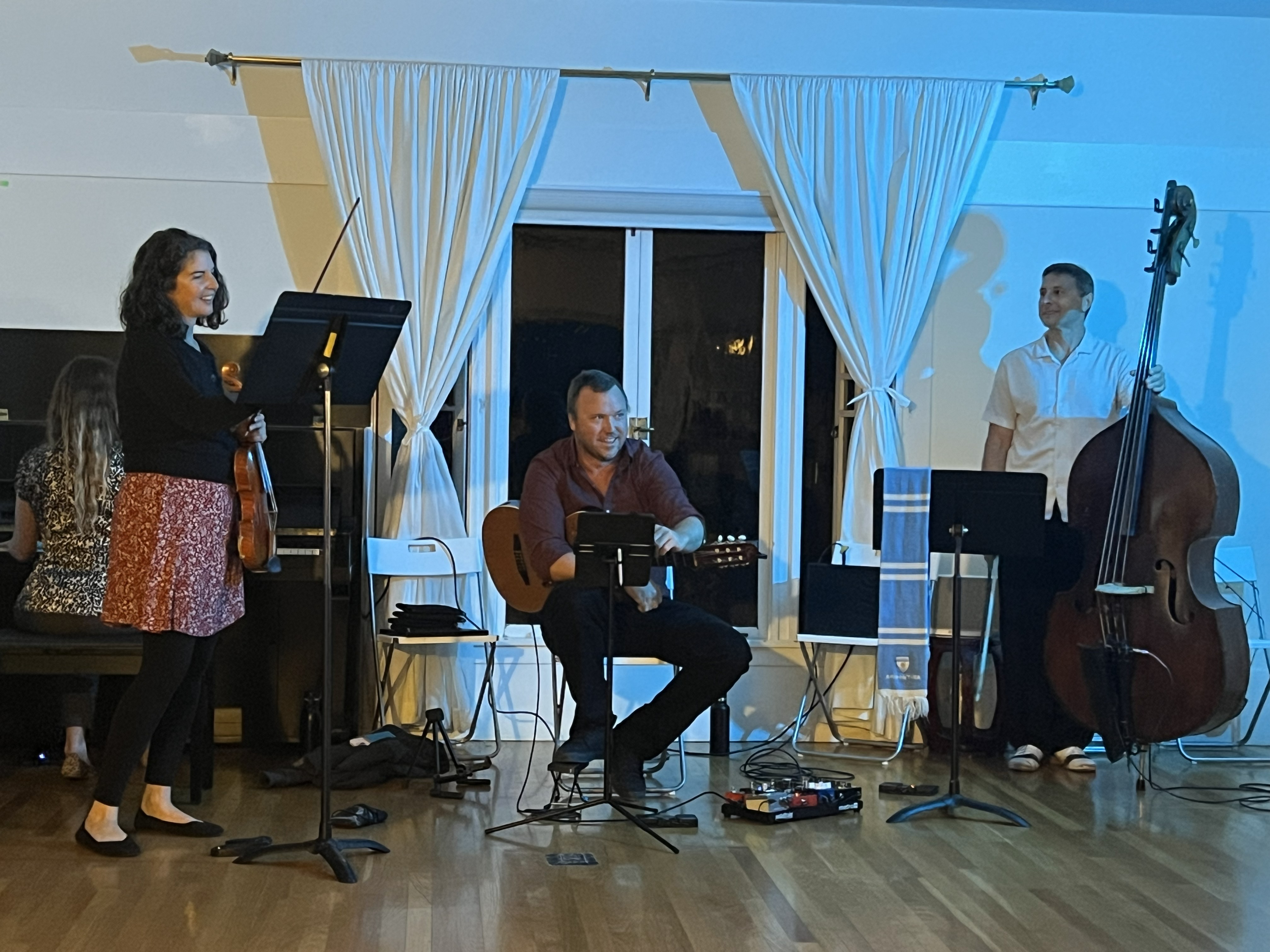
Time: From 12:00 to 09:00 pm - subject to change depending on the scope of the event. Schedule: 12:00-02:00 Dj Ashvin, 02:00-03:30 Orquesta Loft, 03:30-05:00 Dj Sara, 05:00-06:30 Cuarteto Scott O'day, 06:30-08:00 Dj Karn, 08:00-09:30 Orquesta Tarareando
When: Dance classes are every Saturday at 5:00 pm at the same location, special tango days like this one are on Saturdays, announced in advance.
Price: This was a special event hence the fee changed if you attended the whole day or partially. For any other event that is happening under Tea&Tango umbrella in the future check My Events Bridge. There are early bird, general, patron ticket options.
Parking: Lots of free and super safe parking on the street. I got lucky to find a spot just in front of the house.
Payment: Each ticket option has a link to pay with a credit card to pay in advance. It is recommended that you complete the payment 2 hours before the event, but no one will be turned if you decided just to show up at the last minute.
About the location
His dance and art school is located in a historic Palo Alto house in a very nice neighborhood. It is a two-story house. The 1st floor has the main dance hall where the bands play and milongas are held; there is also a second room in the back for practica. The place is also used for yoga, meditation, and tea ceremonies. Speaking of tea, as someone who is into tea myself, I could not have appreciated it more that we were being served high quality puerh tea all day.
Such a treat. I asked him how he came up with the idea. He mentioned that while practicing the Japanese tea ceremony, he came across a pu erh tea ceremony from China which was shorter. Though it was shorter and quicker, it shared the same fragrance of mindfulness, aesthetics, and refinement; he thought that it was a great match for tango. It is indeed.
Tea calms me down and balances the energy of tango for me
Two years ago, I decided to try acupuncture. At the beginning of our sessions, I sometimes used to joke with my healer that 'I feel good today, but I am sure you will find something that needs refinement anyway'.
On one of those days, I asked him what he was doing to calm down, as he seemed calm all the time? His answer was that drinking tea calmed him down. It definitely resonates with me now. When you are sipping tea in the tea room, chatting with your fellow dancers over tea, your mind becomes calmer. Then, as you come to the dance floor, you can be fully present for your dance partner and flow in tango, completely ignoring any mistakes that you could be making at the time and instead enjoying just being.
A Quick Guide to Feeling Ready for the Day/Evening
Shoes
Comfortable - flat, stilettos, anything that you will be comfortable to dance with. One important thing about shoes, unlike any other location, you are not allowed to step in with your street shoes and you are kindly requested that you leave outside but you can change to your slippers until you find a spot and put your dance shoes on. Street shoes stay outside, tango shoes get VIP access.
Dress code
Comfortable
Partner
Absolutely no partner is needed.
Skill levels
Super beginner friendly. Open to all ages. An amazing and super friendly mix of people. Make friends from different backgrounds.
Snacks&Water (Food)
Since this was a potluck celebration for Thanksgiving Milonga, everyone had contributed by bringing, baking or cooking something. I do not think that anyone left hungry behind.
Vibe
Extremely friendly. It is in fact one of the most welcoming super friendly tango environments that I have ever been to. There are benches everywhere along the wall, in front of the window so that you can put your belongings underneath and rest in between different tandas.
People not from the dance scene generally ask me about the age group of the events that I am attending. When it comes to dancing, age really does not matter, dancers would know. But I understand some people would like to attend the events that they may find more or less around the same age group. In this community, you have all age ranges. It is extremely encouraging to see people with diverse backgrounds and for different reasons to be there: an empty-nester married couple finding a new hobby; a vibrant, senior woman with a ballet background learning tango; a photographer who volunteered to take pictures while also learning the dance; and a couple visiting from Sacramento for the love of the art. These were just a few of the people I had the chance to talk to in more detail.
Crowd Size
Around 20-30 people. While the house had multiple rooms, since the bands played in the living room, our main dance floor was the living room. As the sun sets, more people arrived, reaching around 40-50, the living room somehow managed to hold us all — tango has a way of negotiating space.
Somewhere between tandas, tea, and conversation, the day slowly became something else.
Stories from the Dance Floor
Observation Headquarter - the bench
I absolutely did not know anyone when I arrived. Everyone was new, and no one was actually dancing. I must say, this initially brought some frustration, wondering if the start was an indication of how the rest of the event would go—it was absolutely not going to be the case, quite the opposite, thankfully. The music was on, but the majority of the people were already in the kitchen, chatting and enjoying the food. I joined them but remained observant, trying to get familiar with the venue, the people, etc., and enjoyed the wonderful potluck for a while.
I do not do milongas
When the music started a milonga (the fast and sharp rhythm of tango), I approached the person I had previously danced tango with and asked him if he wanted to dance milonga. This was one of the rare occasions that I have asked someone to dance; generally, I wait for the cabeceo—this is where the leader makes eye contact and gives a slight head nod or tilt, and the follower catches the eye contact and responds with a nod.
However, I was rejected with the following explanation: 'I do not do milongas.' I was surprised to hear that because he was such a great dancer. He must have seen my startled expression, because he explained that he believed if he wasn't perfecting something, he shouldn't do it. I replied, 'But if one does not try and repeat, perfection will not come either.' He agreed with me, yet he said that was simply how he felt. I respected his choice.
Milonga, apparently, is not for everyone, even when tango is. I enjoyed the chat and also got the chance to dance a tango vals, which I equally enjoyed.
Expressive face while dancing
As I was observing the dance floor, I started talking with the volunteer photographer. We discussed where I am coming from, how I started to dance, and other common topics among dancers while socializing between tandas.
He has been practicing photography for 30 years; he even ran a photography club and built a color darkroom and studio in college. Up until two years ago, he had been pulled away by work travel, but a friend recently reminded him to return to what he loved. He has been taking pictures again ever since.
His story stayed with me, not just because it was familiar, but because it quietly pointed to something larger.
Why We Return to What We Love — Why We Start Dancing (and Why We Stay)?
We all have jobs and if we are lucky we also love what we do at work but what makes us happier is something we do that we choose freely, self-directed, practiced for our own-sake.
At work, we are being measured by things that we do not have control over, the enjoyment also depends on those factors as well. By contrast, when we dance or create, we are not being measured, we are BEING.
Outside work, pleasure is not a side effect, it is a goal. Intrinsically motivated activities such as dance, photography give us more joy, less burnout, and a definitely stronger sense of vitality.
Creative activities like dance or photography, engage the body and the emotions, activate curiosity and flow, and allow mental recovery. Work consumes even it is very enjoyable, but non-work passions restore self. That's why we feel more alive after a hobby than after a good work-day. And more important, they create presence and flow.
So when the photographer mentioned that I had a very expressive face while dancing, I asked him if he could describe what it is since I do not see myself while dancing and instead he showed the pictures that he took. He said, I am smiling in most of the pictures and he wondered if I knew any of the dancers. Maybe that was why. I said no, it was the first time that I was dancing with every and each person. Then I thought I must have been "IN THE ZONE" while dancing.
In the Zone (that feeling when everything clicks)
I first heard about the concept from my new windsurfer friend that I met back last September. He is great at quoting movies and/or books while we are discussing a topic - which means our conversations occasionally come with a soundtrack. A talent I've come to accept as part of the package.
As we were trying to get to know each other more, he said that we have something in common. He said that we are both in the zone while him windsurfing and me dancing. In the zone? And he said, you know, like in the animation "Soul". I have never watched the movie before and we decided to watch it together.
The zone closely matches what psychologist Mihaly Csikszentmihalyi described as "flow". Basically, "in the zone" describes a mental and emotional flow state where a person is completely absorbed in what they are doing.
- Total focus: When I am dancing fully connected to my dance partner, I am losing track of time. I am in the zone.
- Effortless performance: Steps feel natural, not forced.
- Loss of self-consciousness: Worries, distractions, other thoughts fade away, the mind is quiet - full enjoyment of dance and I start naturally smiling.
- Skill meets challenge: Not bored, not overwhelmed.
- Connection to purpose - intrinsic reward: The act itself feels meaningful.
The flow is healthy and beneficial when it improves performance, increases learning and creativity, boosts well being and satisfaction.
For most people, this state is simply joyful and healthy. Like many meaningful experiences, it also works best when it stays balanced. Over time, people learn how to enjoy the zone without getting lost in it.
The movie "Soul" touches on this idea by showing what can happen when passion turns into obsession — when the zone starts to replace the rest of life.
So for example if a tango dancer's self-worth depends on being admired, dancing only with the "right" partners, or what happens on the dance floor, life outside tango can start to feel flat. At that point tango is no longer a place you visit, it becomes the only place that you exist. In the movie, this is called being a "Lost Soul" — when someone forgets that they are more than just one role.
When a dancer can enter the zone and leave it easily, tango stays joyful, sustainable, and deeply human. So my smile is not performative, it is a byproduct of an alignment. My expressiveness happens during engagement and when the dance ends life continues to feel meaningful. When the tanda ends, and someone says "thank you", and just like that, the zone releases me — right back into the room, the music, and the next dance.
Summary
If you are looking for genuine connections and a friendly start to your tango experience in the South Bay, you should definitely visit this cozy spot near Palo Alto. One of Karn's students mentioned that instead of simply being corrected—as many teachers do—Karn explains moves in various simple ways, which has helped him engage even more deeply with the dance. There is a right teacher for every student, and I'm glad he found his.
Come as you are, you will find a place.
Support the Rhythm
The platform began as a meeting point between two people who were both "in the zone" — but in very different ways.
One moves between somatic and cognitive flow, engaging deeply with analysis and problem-solving and regulating through dancing, movement, and sensory presence.
The other lives primarily in cognitive flow, regulating through coding, focus, and structured thinking.
At times, they quietly wondered how the other one functioned at all. And yet, this platform exists precisely because those differences were respected rather than resolved.
My Events Bridge grew out of honoring those boundaries instead of erasing them — and it continues to exist as a space for connection, not conversion.
If you'd like to support the work behind this platform, you can do so through Buy Me A Coffee. Your support helps cover the time spent reviewing and writing, platform and hosting costs, and the ongoing improvements that allow this space to grow and remain accessible.
By supporting the platform, sharing it with others, or simply engaging with the work here, you help this rhythm continue.
Thank you for being here — and for supporting the rhythm in the ways you can.
Back to Blog