This is a West Coast Swing social dance night with beginner and intermediate classes before the social dancing.
Why We Picked This Event
I have been longing to try West Coast Swing (WCS) for a long time. But I also needed to learn some basic steps before trying to dance socially. This event came to my attention on My Events Bridge, and after a wonderful day spent in Berkeley to celebrate my honorary niece’s 2nd year birthday, I still had the energy and mindset to learn some new steps and to explore a new community. The location was familiar to me for their Saturday milonga nights pre-COVID times. But I had no idea that they were also organizing different dance types.
What is “West Coast Swing”? (WCS)
You won’t get much history in a beginner class (fair enough — you’re busy counting to 6 and 8), but if you are curious about the history, apparently it is considered the official dance of the State of California.
Originating from Lindy Hop, a man named Dean Collins came to Los Angeles from New York in the 1930s to get into the movie business and danced his version of Lindy, later teaching it, which became today’s WCS.
There are differences between East Coast Swing and West Coast Swing. Primarily, WCS is based on the stretch between the partners and is more technical, but also slower.
Event Details
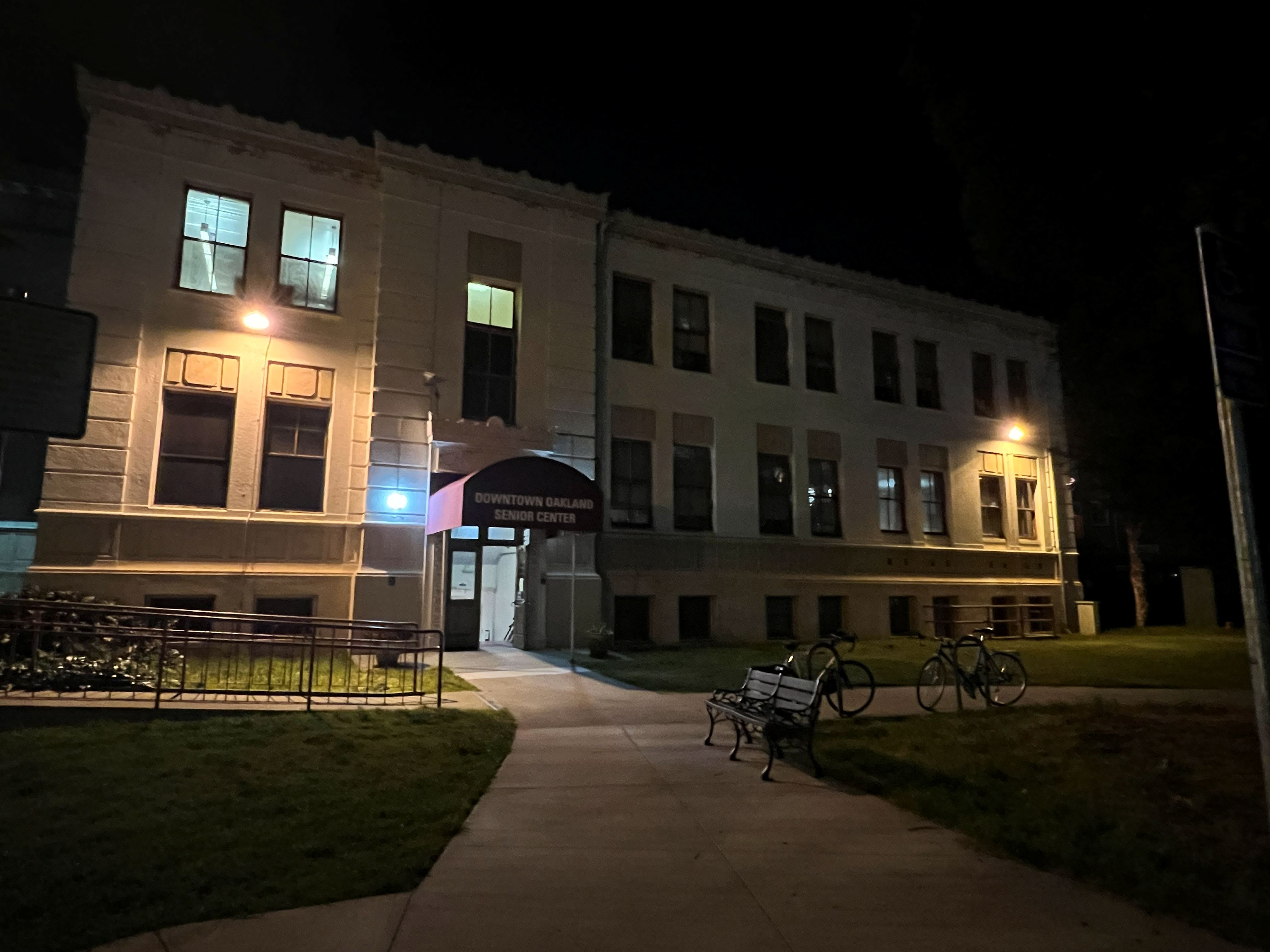
Location: 200 Grand Ave, Oakland, CA.
Time: 7:00 pm–8:00 pm beginner and intermediate class; 8:00 pm–11:00 pm social dancing.
When: 3rd Saturdays.
Price: Social dancing $15; dance class and social dancing $20.
Payment: You can pay with a credit card at the check-in desk. Pay first and join the class or dance later.
Parking: If you come early enough, you will find a spot in its own parking lot that is reserved for the dancers on dance nights. The place also has a security guard in the parking lot. But if the demand is too high for the night (meaning there are many dancers), then you may go for street parking options — and possibly a short reflective walk around the lake.
Food & Drinks: No snacks are provided at this event; bring your own snack, and you are definitely encouraged to bring your own water bottle.
About the Location
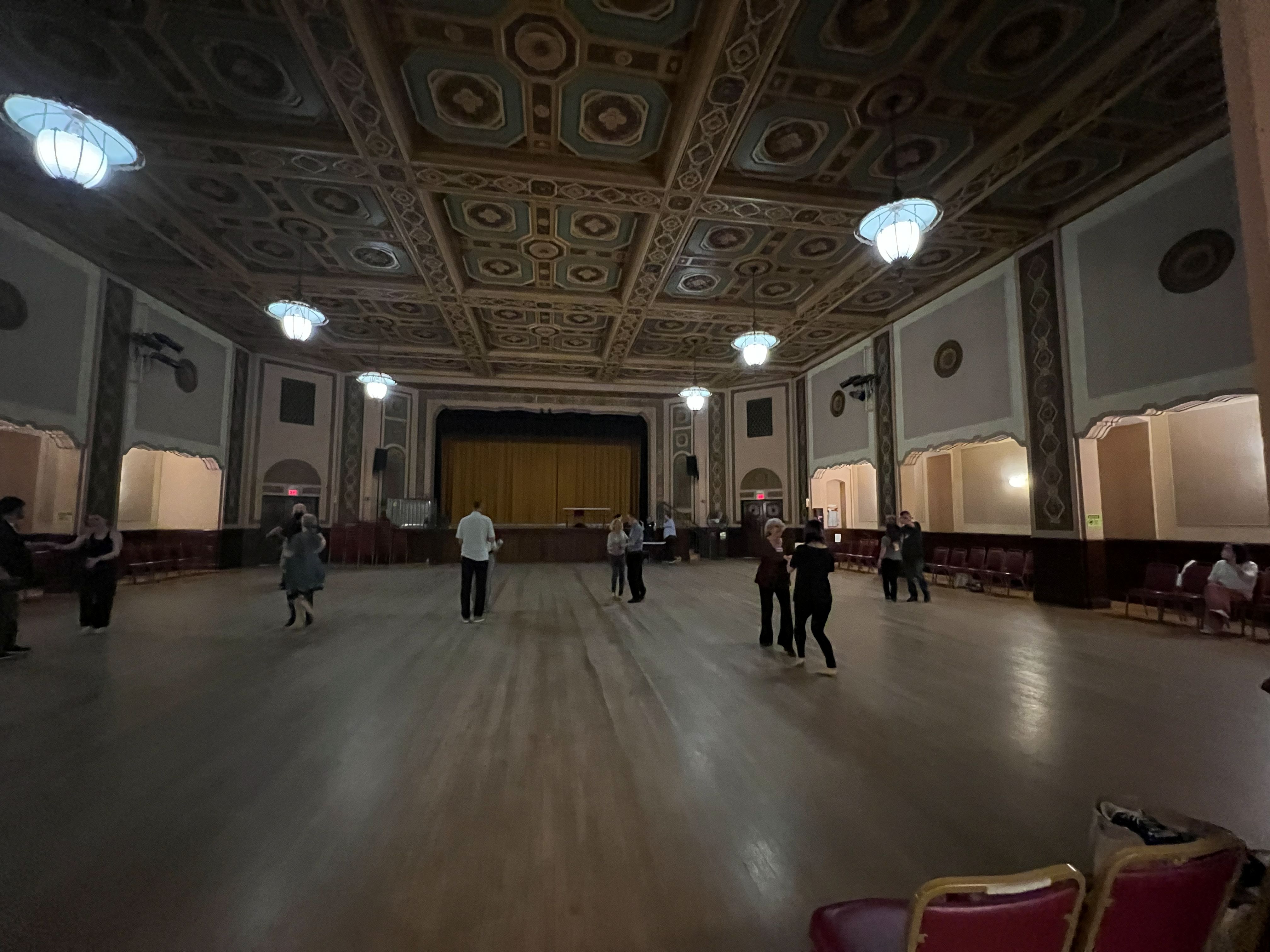
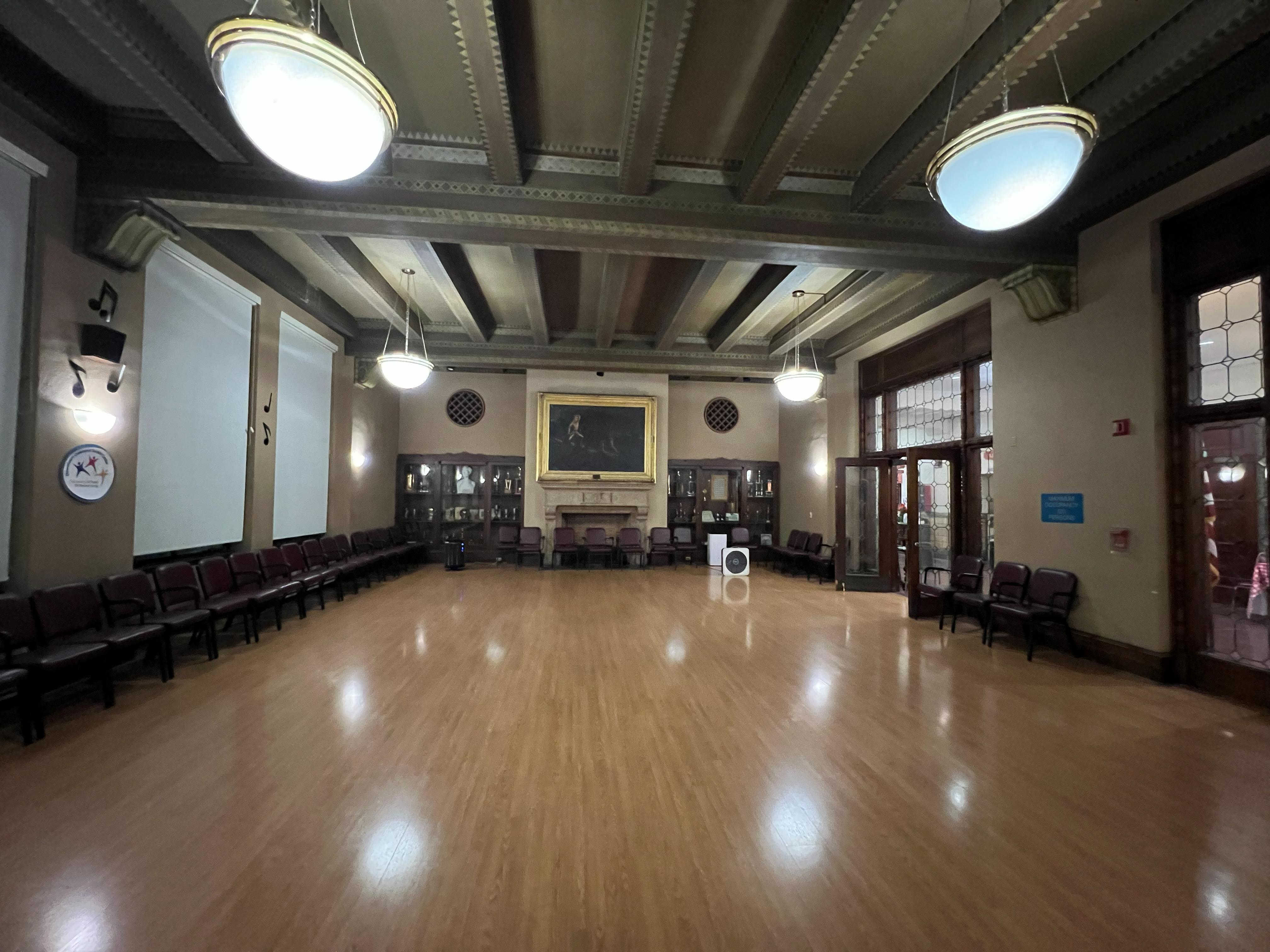
Veterans Memorial Building has 6 different rooms that can serve simultaneously for different dances. The smallest has a capacity of 53 people, and the biggest has 315. It is located just across Lake Merritt.
For those coming out of town and not familiar with Oakland, it is recommended that you do not leave your valuables visible in the car (in fact, do not leave anything at all), particularly if you are parking far away.
A Quick Guide to Feeling Ready for the Night
If you’re wondering what to bring or expect, here’s the quick version:
Shoes
Dance sneakers, jazz shoes, and dance boots can all work here (maybe not so much for beginners).
Dress Code
If you are feeling a bit festive, you can wear a dress or skirt; otherwise, any comfortable pants, leggings, sports pants, or jeans will work for the purpose.
Partner
There are people who come with their partners (and in fact with their spouses), but no partner is required. You will dance with different dancers at different levels.
Asking for a Dance
The night starts with classes, and once they end, the room transitions directly into social dancing. Asking for a dance could be as explicit as someone approaching you, standing just in front of you, and asking, “Would you like to dance?” Or someone may use something similar to sign language (not because you actually need it), making a V-shape with their index and middle fingers and pointing them down toward a flat hand. You change partners each dance unless you both decide to dance for another song. It’s also okay to politely decline a dance.
Skill Levels
There are beginner and intermediate classes that run simultaneously before the social dancing. The intermediate class had more attendees. In the beginner class, there were 3 people, including myself, which gave you more opportunity and time to ask a bunch of questions.
The class was taught by Shin Aoki. He is structured and was able to teach all the core patterns in a given time period. There are 4 core patterns that you learn in the beginning.
Left Side Pass, Right Side Pass (underarm turn), Sugar Push, and Whip are structured in either 6 or 8 counts. You literally count with your inner voice — and occasionally panic when you lose count at 4. The instructor, Shin, encouraged us by explaining that all the dancers in the community will accommodate you with 4 steps during the dance if you let them know that you are a beginner. So the experienced dancers will voluntarily assist the beginners.
Vibe
LGBT+ friendly event. You can dance in any role regardless of gender. Hence, you can ask someone to dance or wait to be asked. There are also pre-printed gender pronoun stickers on a desk in the dance hall, and you can also use blank stickers to write your name for an easier self-introduction to others.
Crowd Size
There were 25 people, and the social dancing happens in one of the big rooms. In fact, when the number of people is around 25 in a big room, you kind of feel lost — like you accidentally booked a ballroom just for your personal overthinking. But I was told that there are generally more people. Yet, if you like bigger spaces while dancing, you will definitely have it.
Stories from the Dance Floor
If you are new to the community, you are noticed immediately — not because of your dance level (relax — anyone is welcome here), and not in a scary way, but more in a “new face detected” kind of way.
I danced with someone who was identified as an experienced dancer by the others. I introduced myself as a beginner to WCS, and at the end he said, “Wow, I wasn’t expecting that fast,” which I chose to interpret as a compliment and not a warning.
Even among the beginners, some people might be more experienced than you. R, who is into contra dancing, was also a beginner but practiced the new steps with me. I was very appreciative. While we were observing the dancers from our corners and exchanging opinions, I received a text message from a friend telling me that he was about to go to the emergency room due to increasing pain. Since there were not many people and I had the chance to dance with almost all the leaders, I turned to R, thanked her for the lovely and welcoming conversation, and then texted my friend back that I was coming to accompany him. Still, it was almost 2.5 hours of dancing, ending around 9:30 pm. But normally the dance ends at 11:00 pm, and there were still people coming at that late hour as well. So do not think that you are missing anything; you can join the night at any time before 11:00 pm.
Summary
If I think about the night as a whole, it actually felt very much like West Coast Swing itself — a series of unexpected transitions that somehow stay connected.
The day started with celebrating my honorary niece’s birthday, full of energy and joy. That same energy carried me onto the dance floor, where I was learning something completely new, counting steps in my head and trying to keep up. Then there was a quiet moment of connection — practicing with R, exchanging thoughts from the sidelines, and feeling a sense of ease in a new environment.
And just as the rhythm of the night was settling, it shifted again — a message from a friend, and suddenly I was on my way to the emergency room.
In a way, it mirrored what West Coast Swing teaches early on: you don’t always control the next move, but you stay present, adapt, and continue from wherever you are. The dance doesn’t have to stop — it just changes direction.
Support the Rhythm
My Events Bridge exists to make discovering dance events like this in Oakland and across the Bay Area a little easier — through real experiences, observations, and reflections from the social dance floor.
If you'd like to support the work behind this platform, you can do so through Buy Me A Coffee. Your support helps sustain the time spent attending events, writing reviews, and maintaining a space where dancers can explore West Coast Swing and other social dancing opportunities with more clarity.
Your support — through Buy Me A Coffee, sharing this platform, or returning when planning your next dance — helps keep this rhythm moving forward.
Thank you for being here.
Back to Blog