
Why We Picked This Event
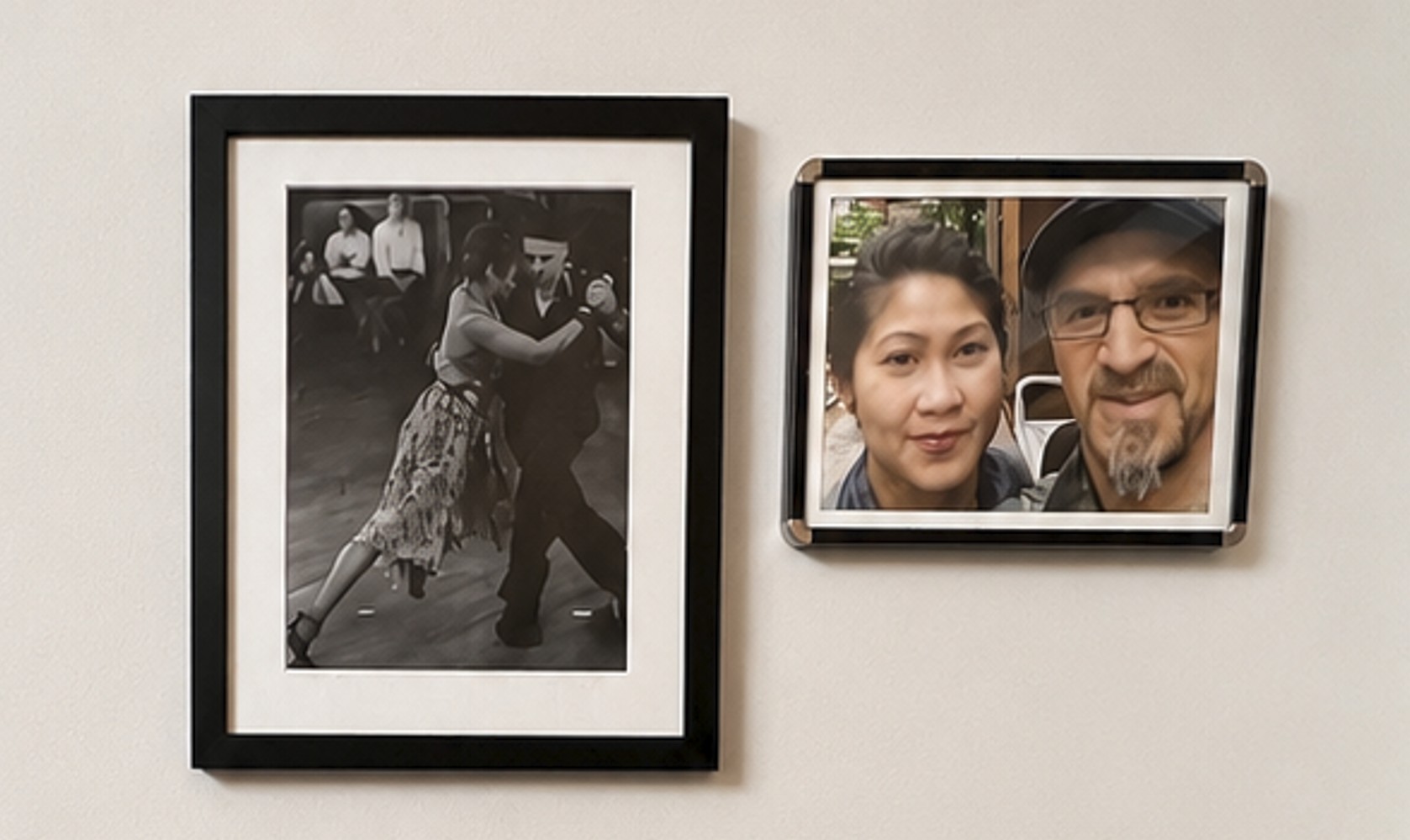
Homer Ladas is a very well-known contemporary tango teacher. He has been dancing tango since 1997, and teaching since 1999. Since 2001, he has been dancing with his wife, Cristina Navarro Ladas.
I first met them years ago while they were teaching on Mondays at The Beat and hosting All Night Milonga in rotation with Felipe Martinez and Ayano Yoneda. I also remember that they hosted guided Thursday practica nights at The Beat.
While they are no longer actively teaching at The Beat on Mondays, they still teach and attend festivals as visiting teachers. In fact, you can find a series of instructional videos on YouTube taken at the end of their classes.
This was not my first time attending Homer’s 1st-Saturday Mixed Music Dance Event, but I chose this visit to write about after also attending the Ashkenaz event the night before, on July 3rd, 2026. Homer and Cristina taught the all-level class before Juan Villarreal and Scott O’Day’s live music experience, and Homer also DJed later that evening. Seeing Homer and Cristina teach together again after such a long time reminded us how much we had missed their presence as teachers — and made the next afternoon’s mixed-music practica at The Beat feel even more meaningful.
Homer organizes and hosts the 1st-Saturday Mixed Music Dance Event, and he also DJs on some Saturdays.
What Is a “Mixed Music Dance Event?”
This practicaA relaxed tango practice event where dancers can dance, experiment, pause, ask questions, and work on material in a less formal setting than a milonga. features a mix of traditional, contemporary, and alternative music. A practica is more relaxed than a formal milongaA tango social dance event, usually with tandas, cortinas, and shared floorcraft etiquette.: people come to dance, experiment, pause, ask questions, and occasionally negotiate with their own feet.
Traditional tango refers to the classic recordings from the Golden Age of Tango (roughly 1935 to 1955). This music is acoustic, strongly rhythmic, and driven by traditional tango orchestras led by iconic maestros. The sound is dominated by the bandoneón (a type of concertina button accordion), violin, piano, and double bass.
Contemporary tango began evolving in the late 1950s and 1960s, introducing jazz and classical music elements into the traditional structure. The sound includes more complex harmonies, dramatic shifts in tempo, and sometimes the inclusion of electric guitar or drums alongside classical instruments.
Alternative tango includes any non-tango music that has a rhythm, tempo, and mood that makes it great for dancing tango. It also includes electronic fusion styles. The sound can range from trip-hop, blues, and acoustic pop to cinematic instrumentals and world music. It also features Electro-tango, which loops electronic beats over traditional tango instruments.
Homer defines this event as the spiritual continuation of CELLspace. It follows the Project Tango guidelines for promoting a balance of past & future ideas. Project Tango’s vision was “a well-rounded and thriving tango future for all,” and its mission included promoting tango as a social dance and evolving art form in our world culture while building & maintaining individual & community integrity, balance & respect. Cristina, Homer, and Susan Lee co-founded CELLspace on July 9, 2003, a week after Cristina and Homer found the initial venue. Old CELLspace continued in SF until October 2019 and in the East Bay until February 2020. Currently, Jericha Senyak and Dexter Lohnes are also trying to revive the CELLspace tradition on a monthly basis in Oakland.
Homer continues to teach in Emeryville at The Athletic Playground (details on My Events Bridge), at various pre-milonga events, and through private one-on-one classes.
Event Details
Location: 2560 9th Street, Suite 119, Berkeley, CA.
Dance: 3:30 pm–6:30 pm with rotating DJs.
Parking: Free parking is available on either side of Ninth Street and surrounding blocks.
Fee: $20 USD for the practica; no prior registration is required.
Payment: Venmo or cash. You can pay at the front desk. A volunteer will welcome you and ask you to fill out the check-in sheet with your information and payment method.
When: Every 1st Saturday of the month.
About the Location — The Beat
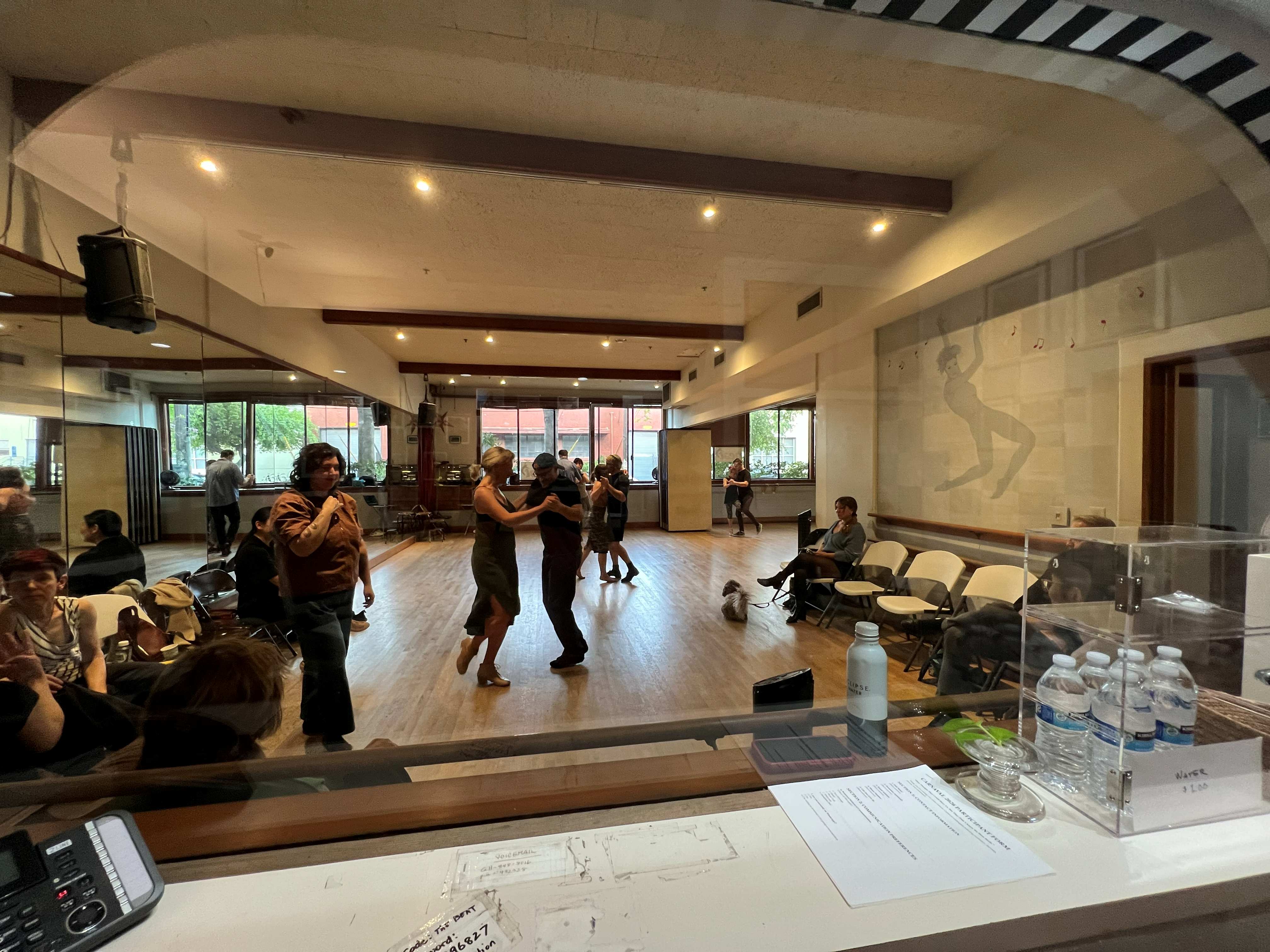
The Beat (also known as The Beat-Berkeley Performing Arts) is a non-profit dance and movement center located in Southwest Berkeley. It offers a wide variety of adult-oriented drop-in classes, progressive series, and community events, with styles ranging from tap, salsa, and jazz to Afro-Cuban, Haitian, hip-hop, and, of course, tango.
A Quick Guide to Feeling Ready for the Event
Shoes
Proper dance shoes with leather or suede soles are recommended for easy pivoting—either heels or flats. Personally, I chose flats. My ankles filed a formal thank-you note.
Dress Code
This is a very relaxed, chill afternoon practica. There is no specific dress code, so wear whatever helps you feel comfortable for the day.
Partner
No partner needed; you do not have to arrive as a matched set.
Asking for a Dance
CabeceoA traditional tango invitation using eye contact and a small nod instead of walking directly across the room to ask someone to dance. rules are followed. Cabeceo is the tango invitation through eye contact and a nod — basically tango’s polite, non-verbal RSVP system. A tandaA small set of tango songs usually danced with the same partner before changing partners or taking a break. is a small set of songs usually danced with the same partner. There are no cortinasShort musical breaks between tandas that signal dancers to thank their partner and return to the seating area. (breaks between tandas), so you can dance as many times with the same partner or traditionally share a tanda (3–4 songs).
Skill Levels
Beginners are welcome. If you are new, it is perfectly okay to watch first, dance one song, take a break, ask questions, or simply enjoy the room before jumping in.
If you want to improve your tango skills or practice new steps or moves from classes during the week, this is a great place to try them with your partner. Some dance partners will openly ask if there is anything you would like to try. Or, if you feel that you could not respond to the leader’s move as expected, or if something felt off, you can pause and ask your partner for feedback or ask them to repeat the same move until you feel comfortable.
Snacks & Water
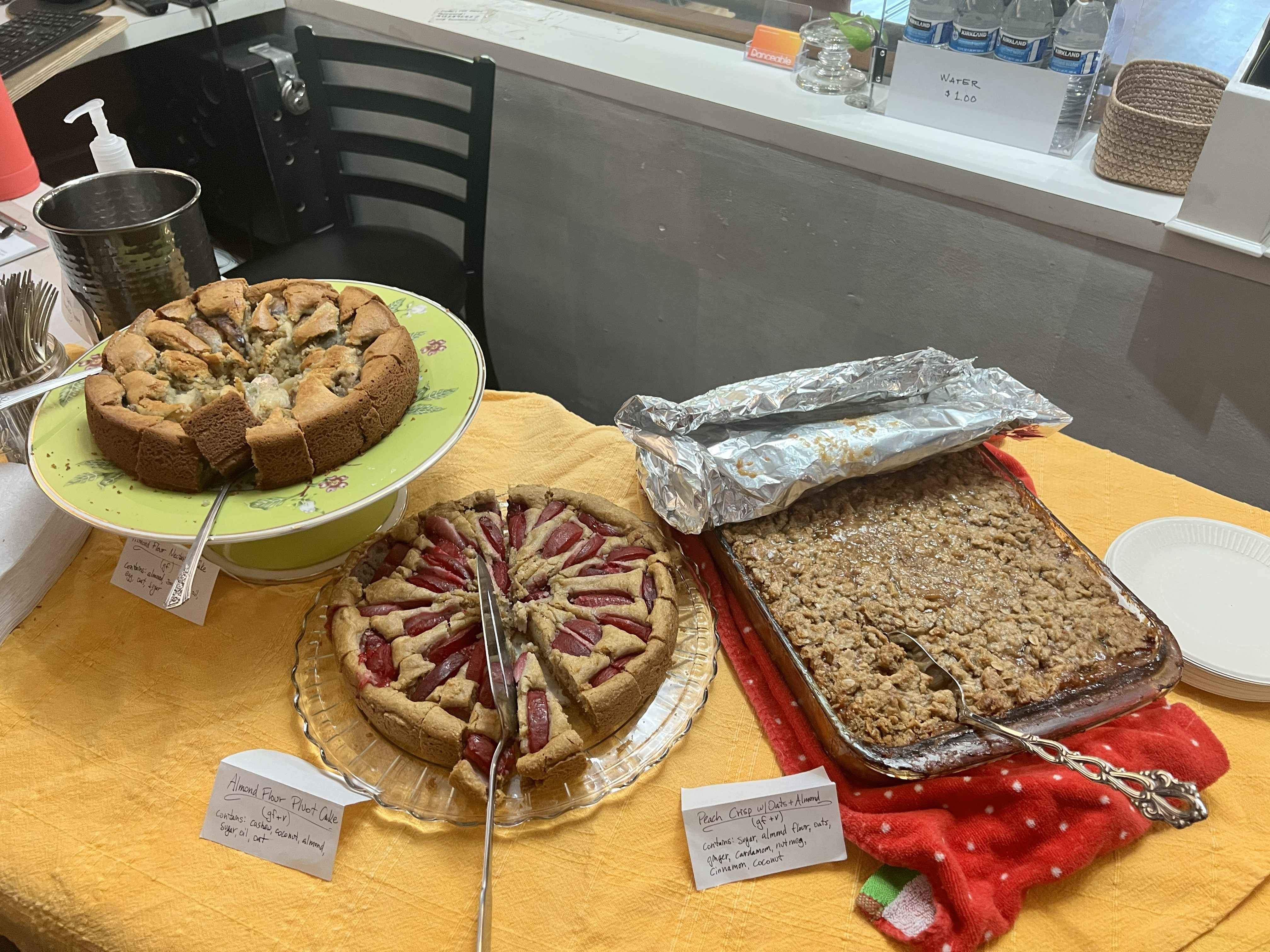
The volunteers typically bring homemade, freshly baked cakes, including vegan, non-vegan, and/or gluten-free options. Depending on the day, you may also find seasonal fruit, homemade bread, cheese, iced tea, or other treats brought by volunteers. The food table in The Beat’s lounge area becomes its own social hub — not officially a tanda, but emotionally close. There is a water fountain, and bringing your own water bottle is recommended.
Vibe
Relaxed and chill.
Crowd Size
20–25 people.
Stories from the Dance Floor
When the leader, A, invited the follower, B, with a cabeceo, they did not know anything about each other. Both were women. B had never seen A before at any of Homer’s events. A asked if B wanted to follow, lead, or switch roles. B said, “I’ll follow.”
An alternative tango song started, and they moved into a close embrace. B had danced with women leaders before, but from the moment she accepted the invitation, the framework felt entirely different. It was a conversation. They were both listening. As they started to move, the dance felt both freeing and deeply connected. Because alternative tango leaves more room for expression, B realized she did not just have to follow — she could create. The music let her move without holding back, pouring her energy right into their embrace.
A seemed to receive that energy with unusual attention. On the dance floor, she did not just direct B’s steps; she listened to B’s body, absorbing every micro-movement B offered.
The music eventually ended, leaving them standing in the breathless aftermath of the improvisation. The closed circuit of their dance broke as they parted, their chests rising and falling with the exertion. A looked at B, grounded and observant, and smiled. “You have so much energy.”
A did not compliment B’s footwork. She did not praise B’s technique or the alignment of her axis. She complimented B’s energy, her essence, and the raw life force she had poured into those three minutes. In a world where we so often move past one another without truly making contact, her words stayed with B.
B realized then what made that specific dance so deeply moving. It was not just the freedom of the alternative beats or the skill of her lead. It was a simpler, much more vulnerable truth: B enjoyed being felt. And in the end, isn’t that the entire point of tango?
Summary
Homer’s 1st-Saturday Mixed Music Dance Event at The Beat is a relaxed, beginner-welcoming afternoon practica rooted in the Bay Area’s mixed-music tango tradition. Organized and hosted by Homer, with rotating DJs and Homer DJing on some Saturdays, the event blends traditional, contemporary, and alternative tango in a space where dancers can practice, experiment, and connect without the pressure of a formal milonga. With simple logistics, a friendly crowd, homemade cake, and generous volunteers, it offers newcomers an accessible way into tango and gives returning dancers a reminder that the most meaningful tanda is not always the one danced perfectly, but the one where you feel truly heard.
Come for the dancing, stay for the community, and do not underestimate the snack table.
Support the Rhythm
At My Events Bridge, every review comes directly from the dance floor—no guesswork, just genuine days/nights out. If these insights helped you find your next great tanda, please consider fueling the project through Buy Me a Coffee.
Your contributions go directly toward covering event admissions, writing thoughtful reviews, and keeping this resource alive for the Berkeley and Bay Area dance community.
Not in a position to donate? You can still keep the momentum going by sharing the site, bringing a friend to your next event, or simply coming back the next time you want to dance.
Thank you for being part of the embrace.
Back to Blog